
Hello, my name is Ian Snapp, and this is the third week of my neuroscience internship at the Scripps DNC. To recap, I am working in the Ye lab, studying metabolism within the nervous system. This research requires a focus on an incredibly minute scale, involving molecular biology and biochemistry.
Things I Have Learned
Last week, I covered the general steps taken to manipulate and test DNA alterations inside neurons. However, there will be continued iterations to the protocols mentioned as I gain a greater understanding of their composition, reasoning, and outcomes. This week included three new changes to my understanding of the miniprep, bacterial transfection, and PCR procedures.
I have learned that the PCR procedures used utilize plasmids (dsDNA in a circular configuration) that include AAV DNA sequences. Previously, I was under the impression that most of the DNA was just bacterial or neuronal, but AAV, I now know, is included to help with the later transfection into the AAV capsid (virus body) to ensure compatibility of sorts. That leads me to the second thing I learned: the latter midiprep I did last week created two samples of plasmid DNA that contain the genetic information to construct an empty viral capsid and supply it with additional proteins/resources via a “helper” plasmid, which I thought created a complete virus, not just the body.
During the bacterial transfection of a PCR performed this week, I learned that the bacteria utilize the sample plasmid. The way it was worded initially sounded like the bacteria just absorbed extra DNA, but it wasn’t necessarily used. I now know that the bacteria express certain parts of the plasmid provided, as engineered, to better help themselves grow. Furthermore, an antibiotic-resistant sequence is included in the plasmid samples. When the bacteria-plasmid sample is heat-shocked, the plasmids are absorbed into the bacteria with that gene, making it resistant to the antibiotics added into the growth media. However, not all the bacteria absorb the plasmids, which results in their death from the antibiotics. This means that the antibiotics we add to the growth media not only prevent contamination but also destroy any bacterial cells except those expressing the genes we engineered.
The last major thing I learned was that the miniprep, or the smaller version of midi and maxiprep, is almost solely used to create a small sample of DNA for sequencing. This step is used to essentially check the results of the PCR reactions to determine if the bacterial cultures containing the genetic information should be cultivated further and refined or scrapped.
Monday
Monday was the longest day of the week, starting with a lab meeting at 9:30, spanning until around 10:30. Once this was complete, my mentor, Dawn, and I looked at the lab requirements our mentor had left us to do while she left for a family trip. Once we overviewed the work and planned the week, we figured out the calculations needed for the 10 PCRs we were going to do that day. The PCRs were used to create four samples (two of each sample for redundancy) and a tag gene that would later be added to the four DNA samples so they can be traced within a neuron.
After lunch, we set to work performing the PCRs, which we initially predicted would take until around five. This soon changed when we figured out the DNA used to create a vector for three of the samples (essentially DNA we were going to cut a hole into so that we could insert different DNA) was at an abnormally low concentration. This low concentration meant we had to recalculate the solutions and adjust their concentrations accordingly. At the time, we assumed there was a slim chance of this working, but, again, this vector was needed to make three out of the four samples, meaning there would be a huge delay in our workflow if we needed to wait until we could get another DNA solution refined. So, we pushed through, trying our best with what we had and worked until 6:30, but we were unable to finish the full PCR procedure.
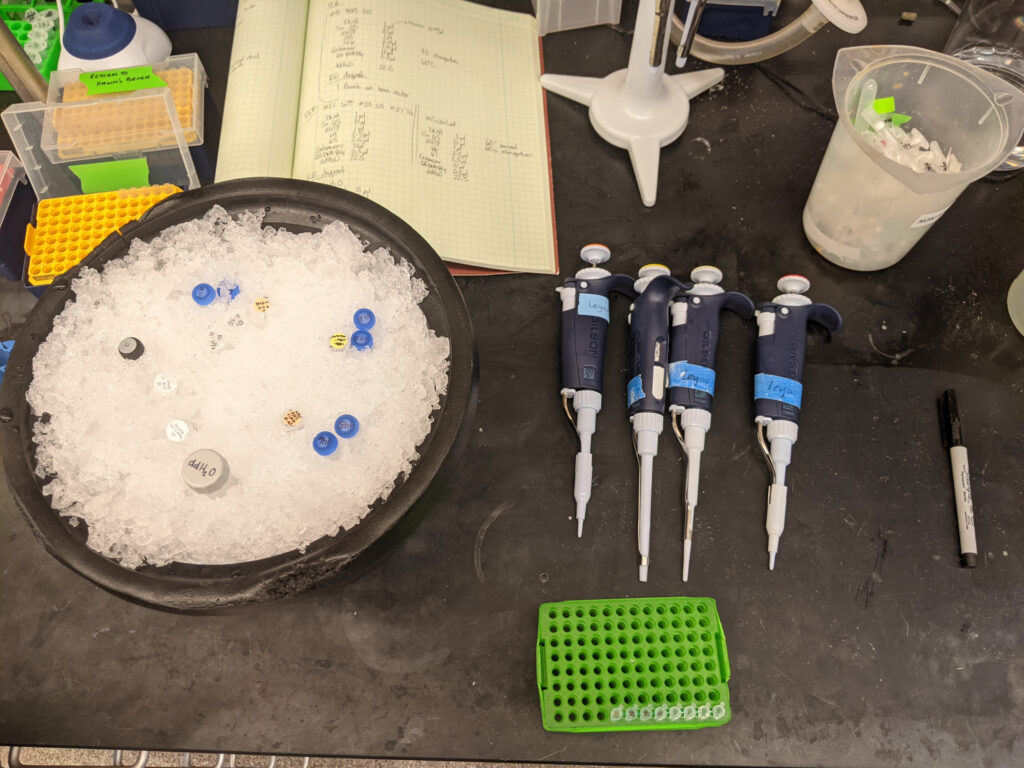
This was my section of the workstation I used to perform the PCRs.
Tuesday
Tuesday was offset by the problems of Monday. To account for this, Dawn and I had to do a gel extraction of the vectors created from the low-concentration DNA solution (just isolating the resulting vectors/cut plasmids). We determined that these would likely work from the extraction, so we continued on to the final step of combining the vectors with the inserts. We did this by adding an enzyme (called Exo III if anyone is curious) to the vector and insert solution. This breaks the dsDNA into ssDNA. Once this reaction is stopped with another chemical (EDTA), the ssDNA vector and the insert solution are heated to 65 degrees Celsius to anneal or combine the two at complementary sites, creating dsDNA plasmids again. To top off the day, we transfected the new plasmids into bacteria colonies on agar plates and incubated them overnight.
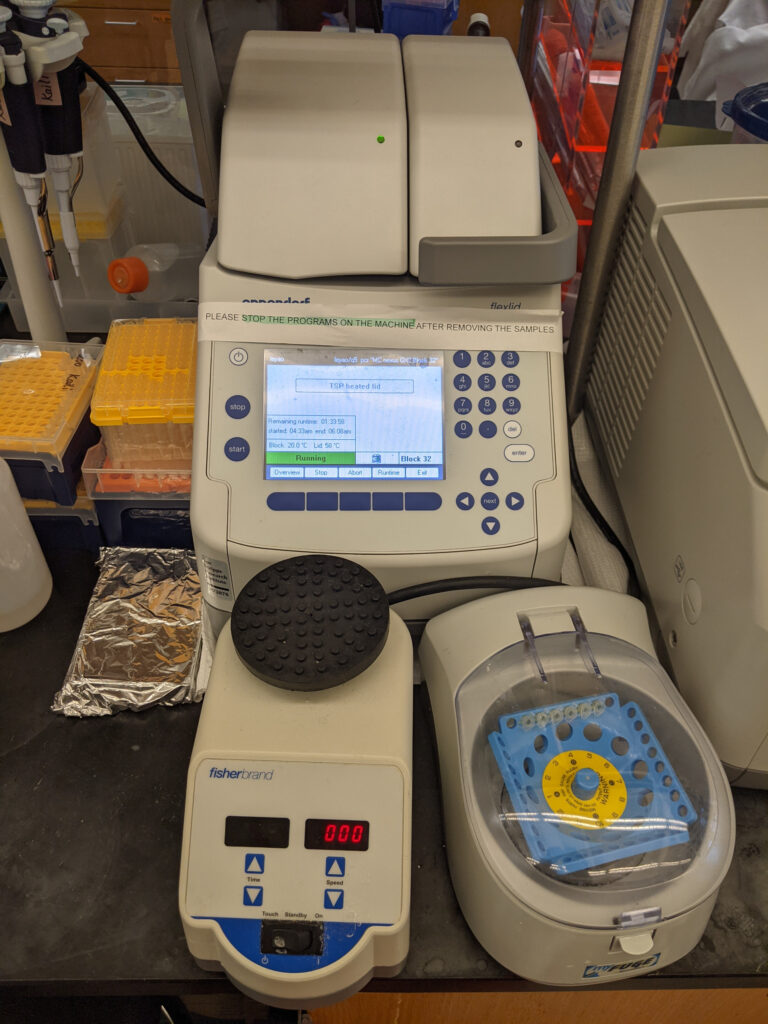
This is the PCR heating machine used to heat the DNA solutions to controlled temperatures to control the reactions.
Wednesday
Wednesday was going to be a short day, but Dawn and I came to work to discover that our bacteria colonies for three of the four samples didn’t reproduce; they died. As explained previously, the plasmids we insert have the genetic information needed to resist the antibiotics we add so that we can isolate only the bacteria that contains the DNA we are attempting to clone. This means that the troublesome vector failed, resulting in the plasmid not getting formed, transfected, and reproduced. Thankfully, after closer inspection, we discovered that out of our redundant set, we could recover two of the samples, meaning we only had to redo one PCR. On top of this, we still had to dissect baby mice (pups), wash dishes, and split the HEK cells, so the day gradually became longer and longer.
The morning started with Dawn and I going to find pups in the downstairs mice incubator machines. Once we retrieved those, we got back upstairs, set up the dissection station, and I watched as Dawn started the procedure. After she had gotten started, I left to start a load of dishes and came back to watch her complete the rest of the procedure.
After a quick lunch break, we returned to work redoing the PCR reaction for the one failed sample. Fortunately, Dawn and I managed to find a hidden plasmid sample with a much higher concentration that we could use for our vector. Using this, the procedure went an order of magnitude faster, allowing us to fully complete the PCR and transfect it into bacteria cultures by around 5:30. Within the heating and cooling periods of the PCR, Dawn was able to split our HEK cells from 3 plates into 15 plates to prepare for the viral transfection next week.
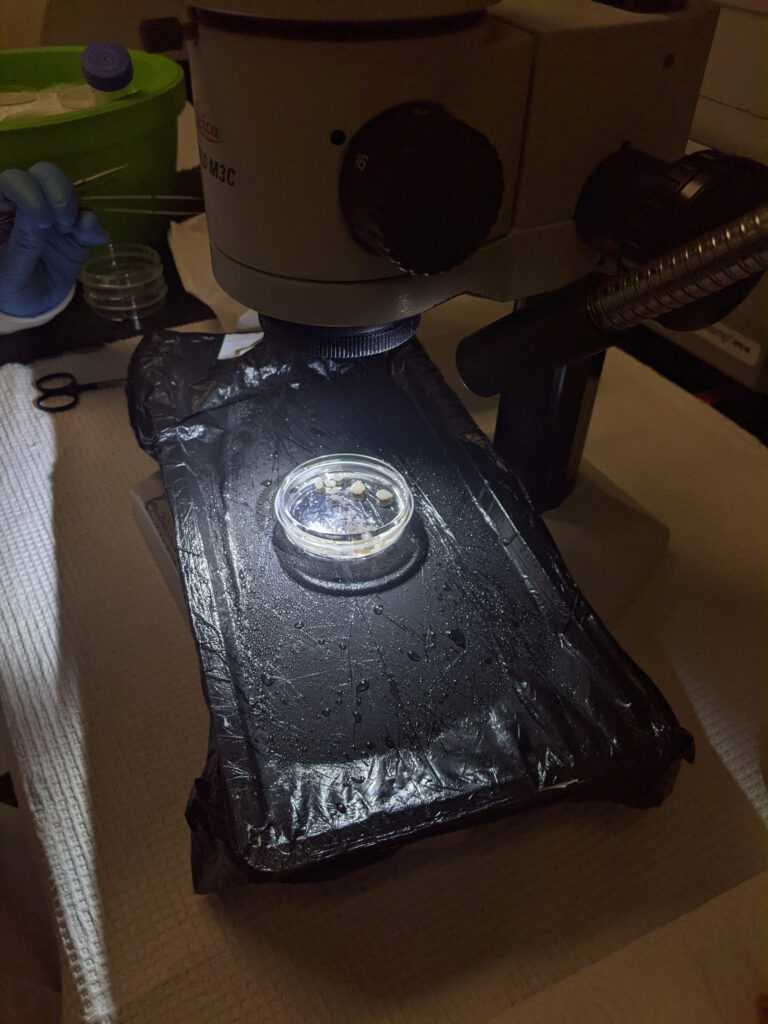
This is a picture of Dawn isolating the desired neuronal tissues of mice brains.
Thursday
Thursday, as most know, is the Fourth of July, meaning the lab took the day off to celebrate. Having a full free day allowed me to start learning to skate on my new skateboard I had bought last Sunday. This was sort of a when-in-Rome situation as I loved learning to surf, but I can’t afford boards and repeated rentals, and I can’t really surf in Colorado. So, the obvious conclusion was to learn to surf on land via skating. A bit of research later, and I was out learning to ride on the sidewalks, roads, and even a bit on the huge skate parks near my rental. Turned out to be just as fun, if not more so, than surfing, which can continue when I go back home.
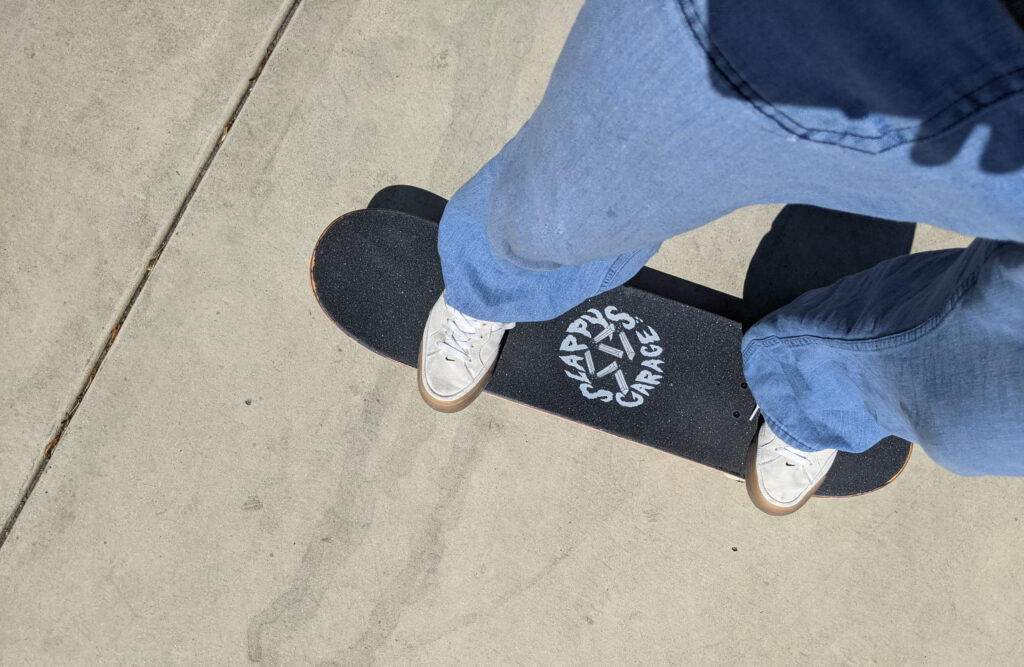
This is me riding on my skateboard.
Friday
Friday was also considered a holiday by the lab, but Dawn and I wanted to do a miniprep to sequence the sample plasmids we have so we can potentially expand the bacteria cultures and do a midiprep next week. Once we got to work, we did a quick miniprep on the bacteria solutions (another lab coworker selected cultures off the plates and put them into a liquid growth media for us on Thursday). This procedure takes significantly less time due to the utilization of a centrifuge to pull things through a filter instead of letting gravity do the work. Once that was complete, the workday was essentially done and I got to go back home to practice my skating again.
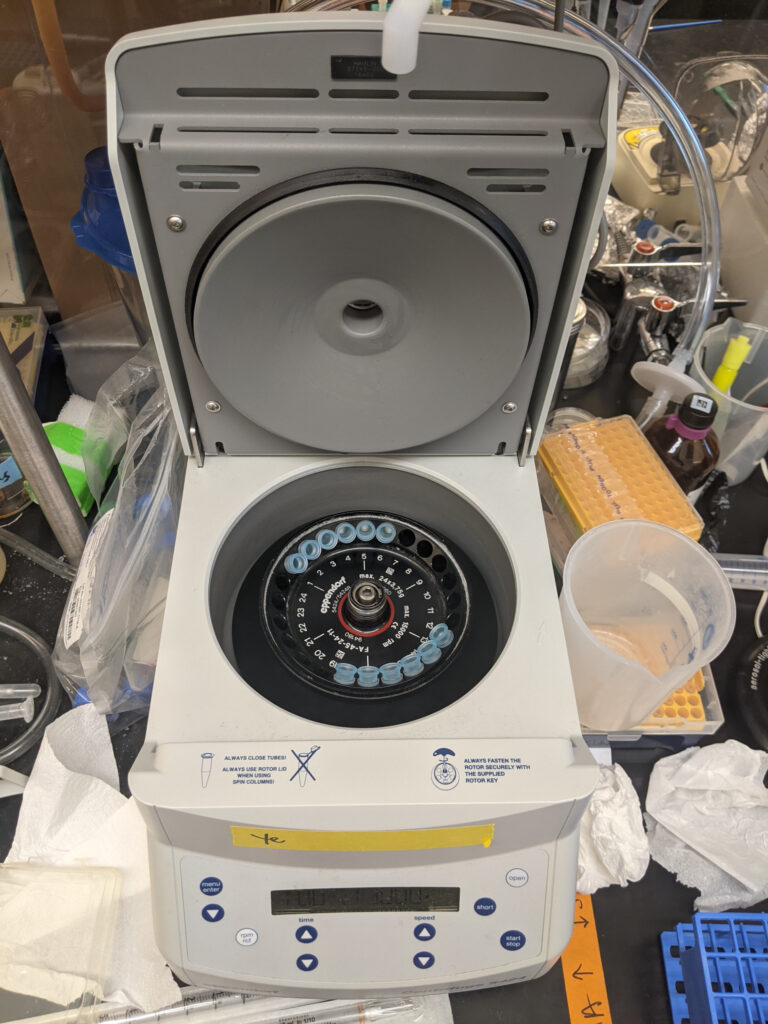
This is the centrifuge we use to spin the solutions through filters to isolate the DNA.
Saturday
Saturday was a mellow day for me. The day was spent reading a couple of books I brought along, skating and learning my balance on the board, and watching a couple of movies at the end of the day.
There are no comments published yet.